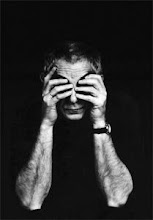
It’s OK to be a ghost. It has its pleasures. You’re light. You float. You slip in and out unseen. There’s no love to lose or burden to be. You have so little to hold you down. You are free. Some pearls are never found. They hide under the sand on the ocean floor. No one knows they’re there. But the pearl knows. Maybe there was a time he wanted to be found. To be seen. And to be held. But now, only hope hurts. I am my own secret. A secret kept by me.
Saturday 25 October 2014
Mike White's writing

Friday 24 October 2014
Mary Poppins
"Life is messy, difficult, dark and complex. Feuds can be made up but never completely solved. Books can try to reflect this sadness and lack of resolution as P.L. Travers books did, even for children but Hollywood films take a different approach. In a way it's like Hollywood itself is a Mary Poppins or an aunt Ellie. It's tidying up the nursery, it's finding a way through the chaos. We want to believe as much now as we did in 1964 that redemption's possible and that is both the lie and the miracle of Hollywood films, that it all be neat and tidy at the end. At some deep human level, it's that order, we crave" - Victoria Coren Mitchell
Friday 11 July 2014
Henri Cartier Bresson
"For me, the camera is a sketch book, an instrument of intuition and spontaneity, the matter of the instant which, in visual terms, questions and decides simultaneously."
Friday 18 April 2014
A poem to the cinema
The Silence
The stage is set
Wherever you were before, no longer exists
Music plays in the background before the lights dim down
People arrive, in different shapes and sizes
There is a short moment of silence as the lights goes down
Light beams, showcasing millions of dust particles in the air
Like being transported to another world, you are about to witness something extremely special
The image is large, the picture is crisp
The vision of scratches, the sound of crackling in between adverts
Feature presentation
When I’m not there, I miss it, the enclosed box of escape
Where everything makes sense
RAHIM
Wednesday 26 February 2014
Hendra
I grew up within the world of my parents running several newsagents within central London as a child. Without them, this project and myself, wouldn't exist.
On the 25th January 2014, I was one of four ushers at my brother's (not blood) wedding. At that wonderful event, I met Sammy Patterson and Alex Oliver briefly, friends of the groom. Two weeks later, a music video/short film was completed between us.
A couple of weeks before the wedding, I wrote two treatment documents, one a coming of age drama that covered several years in a young boy's life into a man, the other, a simple portrait of the life of a shopkeeper in a day. These treatments were submitted as possible scenarios to make a short film of, which in the end would become a music video for the song ‘Hendra’, Ben Watt’s new solo album.
After that perfect weekend in Cambridge flew by, I went home and put my feet up, mind full of scripts waiting to be fed when all of a sudden - a tweet came in.
'Check your email' by Ben Watt, the musician that was leading the competition, co – judged by Mark Cousins, which I had submitted a couple of ideas to a few weeks earlier. The idea entitled 'a short film about a shopkeeper' had been chosen as the winner to represent Ben Watt's song 'Hendra', also the title of his new album, his first solo album in thirty one years.
Lost on my feet due to the unexpected turn of events, a deadline of two weeks loomed in which the music video had to be completed. I stood alone at this point, no producer, no cinematographer, no editor, no location, no idea.
So I phoned Peter Harmer, the man whose wedding I was an usher at. Completely lost and unsure how and if this was going to happen, I needed someone to tell me that it will be fine and that I will help you and Peter was that man. Peter read the treatment with delight and agreed to shoot and edit the film.
Peter put me in touch with Producer Sammy Patterson, a person whom I would recommend to anyone to work with and whom I would work with again without a second’s thought. Sammy thinks from all angles, is organised, is always coming up with new ideas and kept me calm whilst I stressed. All the elements of the production that I thought couldn’t be sorted or achieved, were done so and more, thanks to Sammy.
Myself and Sammy scouted locations together and separately of newsagents mainly, walking from shop to shop and attempting to gain their interest. At a point when it narrowed down to two, it was a childhood surprise that ended up being our perfect location. A residential street shop that Sammy went to as a kid in East London, which became more of a home than a location as we were welcomed by Mr Patel and his family. Furthermore we were able to capture authenticity to the highest standard as the real shopkeeper Mr Patel agreed to star in it.
As with all productions, problems occurred and things changed hour to hour. At a point when Peter came down sick, we were left without a cinematographer and an editor for the project all of a sudden. This is where Alex Oliver, whom I had met at the wedding, came onto the scene. Alex Oliver had shot Peter’s wedding and after viewing her previous work on her website, including a music video for Basement Jaxx, I felt that the subtle scope and visual sensitivity of her work would capture this project beautifully. With my storyboards, visual examples, shot list shared to Alex and with only a few days left until the deadline, we finally had our shoot date secured.
Thursday 6th February - 3.20am: I awoke and drove across London to Leyton to meet up with Alex and Sammy. Shooting began at 6.30am. We wrapped at about 19.30 and Alex immediately began work on the edit.
Within a day, Alex had completed a first cut of the music video, of which I was 70 percent happy with. A few suggestions here and a few changes there and then came the moment when we sent the film to Ben Watt. Myself, Alex and Sammy were at this point very happy with the cut of the film.
The response was warm, welcomed and enthusiastic by Mr Watt. He immediately wanted to share it with Mark, his US and UK distributors who shared positive views. The music video was now nearly complete. Sammy, the Producer took care of the colour grading over the last few days, a process she thoroughly enjoyed and in her own words ‘this is better than going on holiday.’
The music video was submitted finally on the 12th February and it premiered online on the 24th February 2014.
Thank you to -
Peter Harmer for his support and most importantly putting me in touch with Sammy.
Alex Barrett for taking the time to listen to my worries and concerns during the entire production every other day on the phone http://www.alexbarrett.net/
Alex Oliver for taking on the project during her busy schedule and for understanding what I wanted to achieve with the film http://www.alex-oliver.co.uk/
Sammy Patterson for loving the project as much as me.
Sheena Patel for trusting our vision and for nudging her dad to star in the film.
Mark Cousins and Ben Watt for liking my original treatment, for putting trust in me to direct it and tell my story.
My parents - my biggest inspiration in everything I do, have done and will do in the future.
You can view the music video via http://blogs.indiewire.com/thompsononhollywood/mark-cousins-ben-watt-everything-but-the-girl-music-video
Plus via Ben Watt’s YouTube channel: http://www.youtube.com/watch?v=2e_KxrI3erc
To end, two lines from the song ‘Hendra’
"But I must allow these feelings
And just let them fall."

Wednesday 11 December 2013
Iranian cinema lives in my heart
'From Iran, a separation', does what a great documentary is meant to do, it creates debate and more questions, rather than tell you what to think.
'The separation' stands as a pivotal film in Iran's cinema history, one of the reasons being it's the first Iranian film to win an oscar. For some people in the world, this is the only Iranian film they've ever seen or it was the first of many more.
In 2007, I witnessed an audience stand and cheer for Roman Polanski in response for a lifetime achievement award in a venue within his own home country Poland. I had never seen such applause, cheers and admiration for one person before, it must have lasted for at least ten minutes before he was finally able to give his thank you speech.
I asked some native friends afterwards about this reception, myself being a Kieslowski fanatic, one of the most important Filmmakers of my personal and working life. I was told it was because Polanski is a polish filmmaker who has become a global success outside of Poland. Kieslowski achieved this shortly before unfortunate death with his final three films.
For Polanski, this wasn't the case as shown with his first brilliant film, 'Knife in the water,' 1962, which shunned him from Polish audiences because it was a film not about Polish politics which is why the rest of the world embraced it. It's a highly intelligent and terrific film with several layers and deep thematic tissue.
'The Pianist', again a great film but why didn't one of the biggest Filmmakers in the world record the film in its native language spoken within the times? Ang Lee is an example who became a global success after a series of English language films but despite this, he still recorded 'Crouching tiger, hidden dragon' in Mandarin. A true example of integrity and respect towards the truth of a story and it's characters. Why didn't Polanski cast a Polish actor in the film? Adian Brody was great but he's not Polish nor has he any Polish roots! Instead, the fabulous Polish actor Zbigniew Zamachowski has a comedic cameo that lasts for about a minute.
I wonder though, perhaps 'A separation' did for Iran what Polanski did for Poland? An artist represents their country with their work to the world.
For me, there's a world of Iranian cinema that exists before 'A separation' going back several decades, most of which is some of the most important cinema of my life. A recent script I wrote, wouldn't exist in the form it stands now if it wasn't for 'the white balloon', 'children of heaven', 'taste of cherry', moment of innocence', 'colours of paradise', to name a handful of masterpieces. So many films which mean so much to me that I can't actually put it into words.
Does 'A separation bring a sense peace for Iran, has it changed people's perceptions of Iran more, informing them that they have a rich culture and history or was all that destroyed with the 2012 film 'Argo?' A film which I have way too much to say about so I'll leave it up to this great man to tell you everything I want to say and more about the truth of Iran
http://bellacaledonia.org.uk/2012/11/15/mark-cousins-on-argo-iran-and-formulaic-thinking/
Asghar Farhadi, I believe wanted to tell an authentic modern urban story that's still close to Iran and indeed to human civilisation. To appeal to worldwide audiences, you must appeal to your own first and I think he achieved this.
Amongst Iran and the people there is debate. Farhadi's acceptance speech at the Oscars is one that is either seen as beautiful and poignant or political and clever in appealing to Western audiences.
'From Iran, a separation' shows the nights of the Oscars being watched in living rooms around Iran as if it's a grand sporting event. It meant a lot to the people of Iran that their country is represented and shown more for its actually reality rather than what's plastered around the news. That they are peaceful, that they have a rich culture, that they have dreams, are inviting, hospitable, kind and welcoming.
It all makes sense that they would want this, regardless of whether they think 'A separation' is authentic or indeed the right representation. They want the truth about their country and their people to be screened. They too have domestic problems amongst family relations, marriage, trust and love.
They are human after all.
To end this, a celebration of news.
Fribourg International Film Festival (FIFF) and Edinburgh International Film Festival (EIFF) are pleased to announce their collaboration on an ambitious retrospective called The History of Iranian Cinema by Its Creators.
It's an important event to celebrate a country's cinema history which is simply unique and one which I love, adore and admire.
http://cinehouseuk.blogspot.co.uk/2013/12/edinburgh-and-fribourg-film-festivals.html?m=1

Tuesday 12 November 2013
A letter to cinema
Dear Film
I am writing you this letter to express my sincere gratitude for what you've done for my life.
Since I first met you, your presence has always been strong and loyal, challenging and reflective. At times you've held the answers, at other times you've asked the questions.
You've introduced me to a diverse world of cultural people, some of the greatest souls I've ever met and to worlds within worlds within film microcosms.
You've supported me through the tough times and been a source of celebration during the good times.
You gave me something to strive for, something to create, something to share, something to love.
I look forward to our relationship developing, within the cinema, within home viewing, within imagination and dreams.
Thank you for everything. I'll never forget it and I appreciate every moment of it.
Subscribe to:
Posts (Atom)